

Precision manufacturing often depends on selecting the right cutting process for both the material and the design. Among today’s most effective fabrication methods, laser cutting continues to stand out for its accuracy, speed, repeatability, and clean finish. Whether cutting engineered plastics, foam, or specialty materials, laser technology allows manufacturers to create detailed parts with exceptional consistency. At American Micro Industries, understanding how different laser processes work helps match each project to the best fabrication method. One common question is the difference between plastic laser cutting and vector laser cutting. While they are closely associated, they refer to different aspects of the process—and knowing the distinction can help improve both design planning and final results.
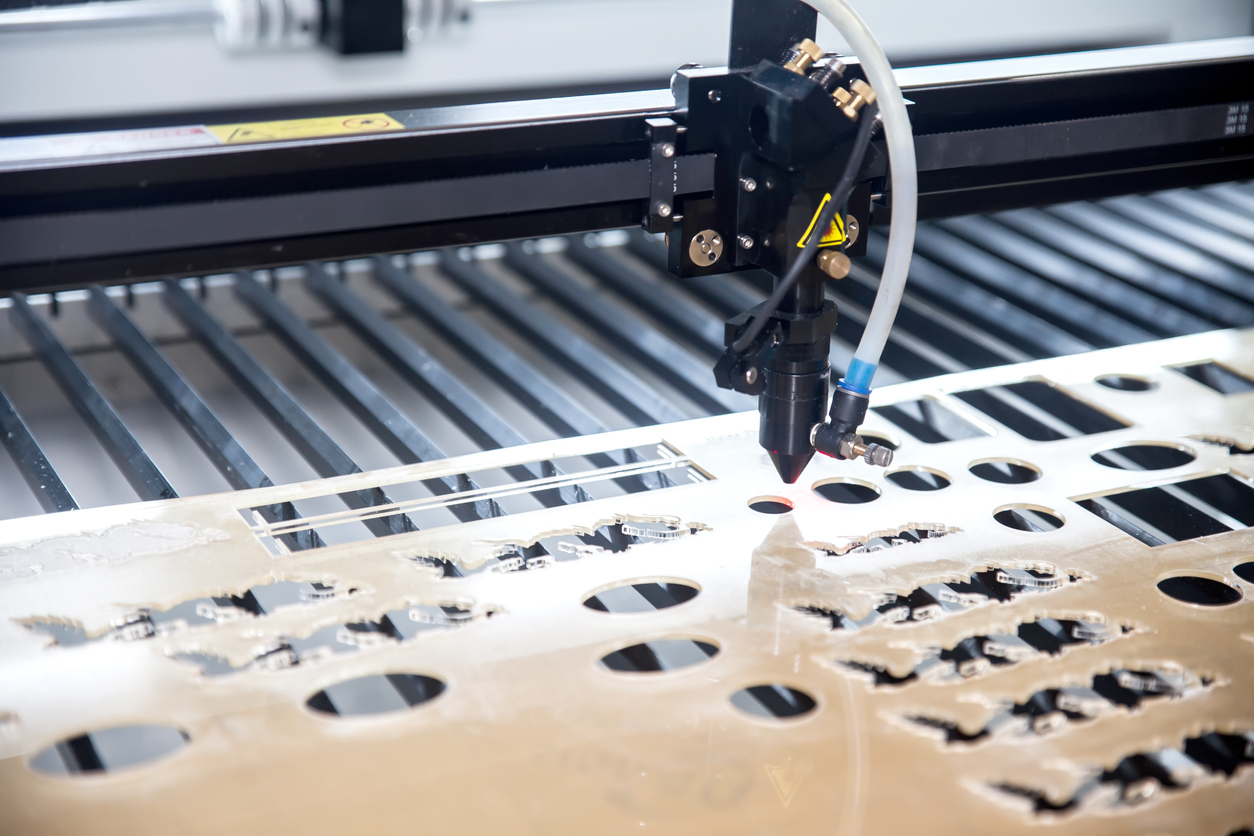
Plastic laser cutting refers to using a focused laser beam to cut through plastic-based materials. The beam melts, vaporizes, or burns through the material along a programmed path, leaving behind a precise edge.
This process is commonly used because plastics respond well to laser energy while maintaining tight tolerances and smooth finishes.
Typical materials include:
Material behavior can vary depending on thickness, density, and melt characteristics, which makes process selection important.
Plastic laser cutting is popular because it offers excellent flexibility for custom fabrication.
Benefits include:
Because there is no direct blade contact, delicate materials are often easier to process without cracking or distortion.
Plastic laser cutting is commonly used for:
Its versatility makes it useful across both industrial and consumer-facing manufacturing.
Vector laser cutting describes the way the laser moves rather than what material it cuts.
Instead of engraving an area pixel by pixel, the laser follows vector lines from a digital file to cut exact outlines and paths.
This movement is usually driven by CAD or vector-based artwork files.
The process typically looks like this:
This creates clean, efficient cut geometry with minimal wasted motion.
Vector-based laser cutting provides excellent precision.
Key benefits include:
This is especially useful for parts requiring sharp dimensional accuracy.
Vector laser cutting is ideal for:
It is particularly effective where geometry matters as much as material selection.
Although they are often used together, plastic laser cutting and vector laser cutting are not interchangeable terms.
One refers to material. The other refers to motion.
Plastic laser cutting focuses on:
Questions often include:
This process centers on material performance.
Vector laser cutting focuses on:
Questions often include:
This process centers on geometry and machine movement.
Many projects use both.
For example:
That means the part is both:
The terms often work together rather than compete with one another.
The right laser cutting setup depends on project goals.
In many cases, both are part of the same workflow.
The best results come from evaluating:
Manufacturers continue choosing laser cutting because it combines speed with precision in a way few fabrication methods can match.
It allows for:
As materials and fabrication needs evolve, laser cutting remains one of the most adaptable technologies available.
Understanding the difference between plastic laser cutting and vector laser cutting starts with recognizing that one refers to the material being processed while the other refers to the cutting path itself. Plastic laser cutting delivers clean, precise results across a wide range of engineered plastics, while vector laser cutting offers the accuracy needed for detailed shapes, smooth contours, and repeatable production from digital files. Together, they create a highly efficient fabrication solution for custom components across countless industries.
At American Micro Industries, advanced fabrication capabilities and material expertise help turn complex designs into precision-cut finished parts. If your next project involves laser cutting, contact American Micro Industries today to discuss your specifications and discover the right fabrication solution for your application.
American Micro Industries supports clients across manufacturing, automotive, aerospace, military contracting, and other industries. From bulk electrical insulation and sound deadening materials to in-house CNC machining, die cutting, laser cutting, plastic machining, and more, our team can help you find the right solution for your project.