


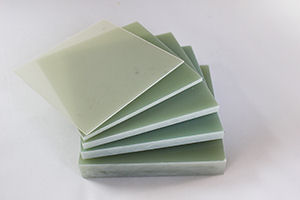
G10 and FR4 are widely used composite materials in electrical, industrial, aerospace, and manufacturing applications because they combine strength, insulation, dimensional stability, and chemical resistance in one durable package. Their layered fiberglass-and-resin construction makes them incredibly reliable under demanding conditions. But like any laminated material, they require proper handling during fabrication and use. One of the most common performance concerns manufacturers encounter is delamination. At American Micro Industries, understanding how materials behave throughout machining and fabrication helps ensure components perform as intended in real-world applications. Preventing delamination begins with knowing what causes it and how to reduce those risks from the start.
Delamination occurs when the fiberglass-reinforced layers inside G10 or FR4 begin separating from one another. Because the material is built in stacked bonded layers, separation can compromise strength, insulation performance, and structural reliability.
While delamination can happen for several reasons, it is most often linked to excessive heat, moisture exposure, mechanical stress, or improper machining conditions.
Heat is one of the most common contributors to delamination in G10 and FR4 fabrication.
Machining operations like routing, drilling, milling, and sawing all generate friction. If the heat is not controlled properly, resin-rich areas can become vulnerable.
Signs that heat may be causing delamination include:
Controlling cutting temperature is one of the most effective preventative measures.
Although G10 and FR4 are moisture-resistant, they are not completely moisture-proof.
That internal pressure can push the laminate apart from within.
This is especially important in environments with:
Moisture control before machining is often overlooked but plays a major role in preventing delamination.
Physical stress can also weaken or separate laminate layers.
Common causes include:
Because fiberglass laminates are rigid but layered, too much pressure concentrated in one area can stress internal bonds.
This often appears around:
Managing pressure evenly is key throughout fabrication and assembly.
Avoiding delamination requires attention throughout the entire process—not just during cutting. Material handling before and after machining matters just as much as the machining itself.
Good fabrication starts before a tool ever touches the material.
Humidity control protects material stability before machining begins.
Best practices include:
Keeping G10/FR4 dry helps prevent expansion-related stress during processing.
Temperature fluctuations can cause repeated expansion and contraction within the material.
Over time, this can:
Consistent room temperature storage is ideal for maintaining material condition.
Improper storage can create bowing or warping.
Recommendations include:
Flat sheets machine more consistently and reduce stress concentrations during fabrication.
Machining technique has a major impact on whether delamination develops.
Dull tools increase both heat and mechanical tearing.
Sharp tooling helps:
Carbide tooling is often preferred due to the abrasive nature of fiberglass-reinforced laminates.
Regular inspection and replacement schedules are important.
Incorrect feed and speed combinations often create problems.
If settings are too aggressive:
If settings are too slow:
Balanced machining parameters help maintain:
Testing settings based on thickness and geometry is often worth the extra effort.
Reducing heat directly reduces delamination risk.
Helpful strategies include:
Even small reductions in friction can improve finished edge quality significantly.
Quality control plays an important role in catching delamination before parts move downstream.
Look for:
Edges are often where delamination first appears.
Drilled features create concentrated stress.
Pay close attention to:
Early detection can prevent assembly failures later.
Even well-machined parts can develop delamination during installation.
Avoid:
Good assembly practices preserve long-term performance.
Preventing delamination protects more than appearance.
It directly affects:
When layers begin separating, performance often declines quickly—especially in demanding industrial or electrical applications.
Avoiding delamination also helps reduce:
For high-performance parts, prevention is almost always more efficient than repair.
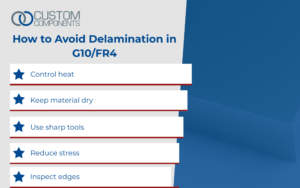
Preventing delamination in G10/FR4 requires a combination of proper storage, controlled machining, careful inspection, and thoughtful assembly. Moisture control, heat management, sharp tooling, and minimizing unnecessary stress all help preserve the bond between fiberglass and resin layers. When handled correctly, G10 and FR4 deliver the strength, durability, and insulation performance they’re known for across countless demanding applications.
At American Micro Industries, precision fabrication and material expertise help ensure every component is manufactured with performance and longevity in mind. If your next project requires custom G10 or FR4 fabrication, contact American Micro Industries today to discuss your application and find the right solution for long-lasting results.
American Micro Industries supports clients across manufacturing, automotive, aerospace, military contracting, and other industries. From bulk electrical insulation and sound deadening materials to in-house CNC machining, die cutting, laser cutting, plastic machining, and more, our team can help you find the right solution for your project.