

Choosing the right manufacturing process is essential for achieving the best balance of precision, efficiency, and cost. CNC machining, die cutting, and waterjet cutting are three commonly used fabrication methods, each tailored for specific materials and applications. Understanding when to use each method can help reduce waste, improve product quality, and streamline production.
Although these methods all shape materials, they operate in very different ways and offer unique advantages. Using an unsuitable method can lead to unnecessary expenses, delays, or performance issues. By knowing when and how to apply each technique, manufacturers can make more informed, strategic decisions from the outset.
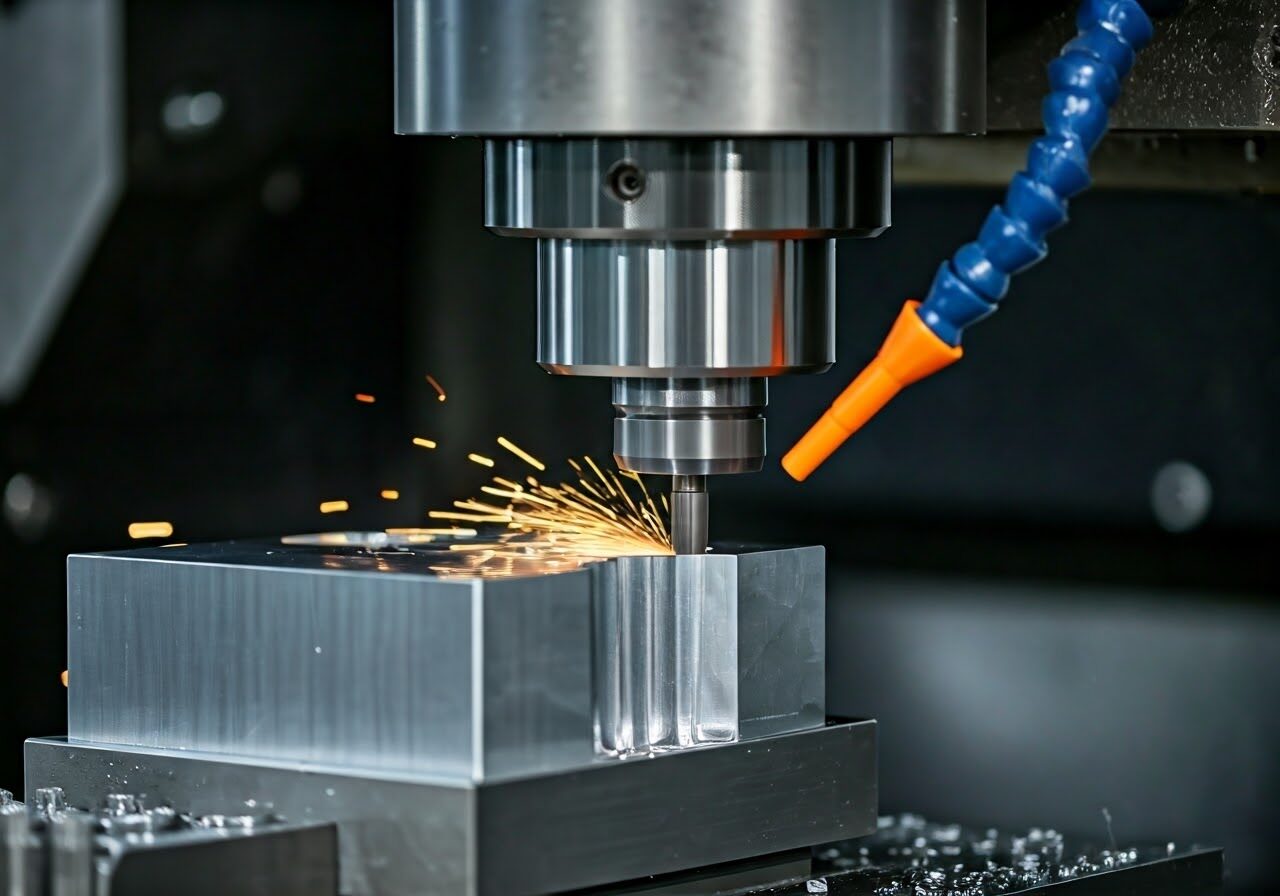
CNC machining removes material from a solid workpiece to form precise shapes, using computer-controlled cutting tools. The CNC machining process is ideal for producing highly accurate, repeatable parts that require tight tolerances and detailed features. Its capability to produce intricate geometries makes it a preferred choice for industries that demand precision, such as the aerospace and medical fields.
Unlike other cutting methods, CNC machining can produce complex three-dimensional parts with intricate geometries, supporting an expansive range of operations, including milling, turning, drilling, and tapping. The versatility of CNC machining enables manufacturers to produce everything from simple components to highly engineered parts. Because the CNC machining process is automated, it ensures consistency across production runs. This level of control makes CNC machining a cornerstone of modern manufacturing.
The key characteristics of CNC machining include:
CNC machining is suited for projects that demand precision, durability, and complex design features, helping engineers feel confident in selecting the right process for critical components in aerospace, medical, and automotive industries.
This process is valuable when working with rigid materials that require structural integrity, and also facilitates quick adjustments during the prototyping phase, making it easier to refine designs. Although it may not be the fastest option for large production runs, its precision and reliability make it essential.
Die cutting is a process used to shape or cut materials by pressing them through a specially designed die, which functions like a mold or template. This allows manufacturers to create consistent parts with minimal variation. Once the die is created, the process is highly efficient and repeatable, making it an excellent solution for high-volume production.
Various techniques are available for this process, including rotary and flatbed die cutting. Each method is suited for specific materials and production needs. Die cutting is particularly effective for soft and flexible materials that can be cleanly cut without distortion. It is widely used in industries that require uniformity and speed.
The key characteristics of die cutting include:
Die cutting is best for high-volume production of parts from flexible or layered materials. It is especially effective for manufacturing products such as gaskets, seals, and insulation components across industries such as electronics, medical devices, and automotive. Recognizing these applications helps manufacturers determine when die cutting offers the most efficient and cost-effective solution.
This process is especially valuable when speed and cost efficiency are priorities. Once the tooling is in place, production can scale quickly with minimal variation. It also allows for tight part nesting, which helps reduce material waste. For manufacturers focused on efficiency, die cutting is often the most practical solution.
Waterjet cutting operates by directing a high-pressure water stream to cut through materials cleanly, often combined with abrasive particles. It is considered a cold-cutting method because it does not generate heat during operation, reducing the risk of thermal distortion and making it ideal for sensitive materials. The process delivers clean, precise cuts without compromising the material’s internal structure.
Waterjet cutting is admirably adaptable and compatible with an expansive range of textiles, from soft rubber to hardened metals.
It can cut thick materials that other methods may find difficult to handle. Because it does not rely on heat, it preserves the material’s original properties. This makes it a valuable option for specialized applications.
The key characteristics of waterjet cutting include:
Waterjet cutting is a great option when you need to avoid high temperatures or if you require very precise cuts, especially with thick or multilayered materials. This method is commonly used in industries such as aerospace, construction, and heavy manufacturing. It’s especially useful for materials that can get damaged or warped by heat.
While waterjet cutting might not be the fastest method, it offers exceptional flexibility. It can work with a wide range of materials without specialized tools for each type. This versatility makes it an excellent option for custom projects or low-volume production runs.
Each of these processes offers unique advantages, and understanding their differences is key to selecting the right one. CNC machining excels in precision and complexity, making it ideal for high-performance, detailed components. Die cutting stands out for speed and efficiency, particularly in high-volume production environments. Waterjet cutting offers exceptional versatility and is ideal for materials that cannot withstand heat.
The preference between these techniques depends on several factors, including material type, design complexity, and production volume. For example, a complex metal component may require CNC machining, while a high-volume gasket may be better suited for die cutting.
Choosing the right manufacturing method requires a clear understanding of your project’s requirements. Each process has strengths and limitations, and selecting the wrong one can impact both cost and performance.
Working with an experienced manufacturing partner can simplify this decision-making process. American Micro Industries’ expertise can help identify the most efficient and cost-effective solution. This guidance ensures that the final product meets both performance and budget expectations.
CNC machining, die cutting, and waterjet cutting each play an important role in modern manufacturing. Understanding when to use each method allows manufacturers to optimize performance, decrease costs, and enhance overall efficiency. If you are looking for an optimized manufacturing process, partnering with an experienced provider can help you achieve the best results. Reach out today to explore the most effective cutting and fabrication solution for your next project and move forward with confidence.
American Micro Industries supports clients across manufacturing, automotive, aerospace, military contracting, and other industries. From bulk electrical insulation and sound deadening materials to in-house CNC machining, die cutting, laser cutting, plastic machining, and more, our team can help you find the right solution for your project.